
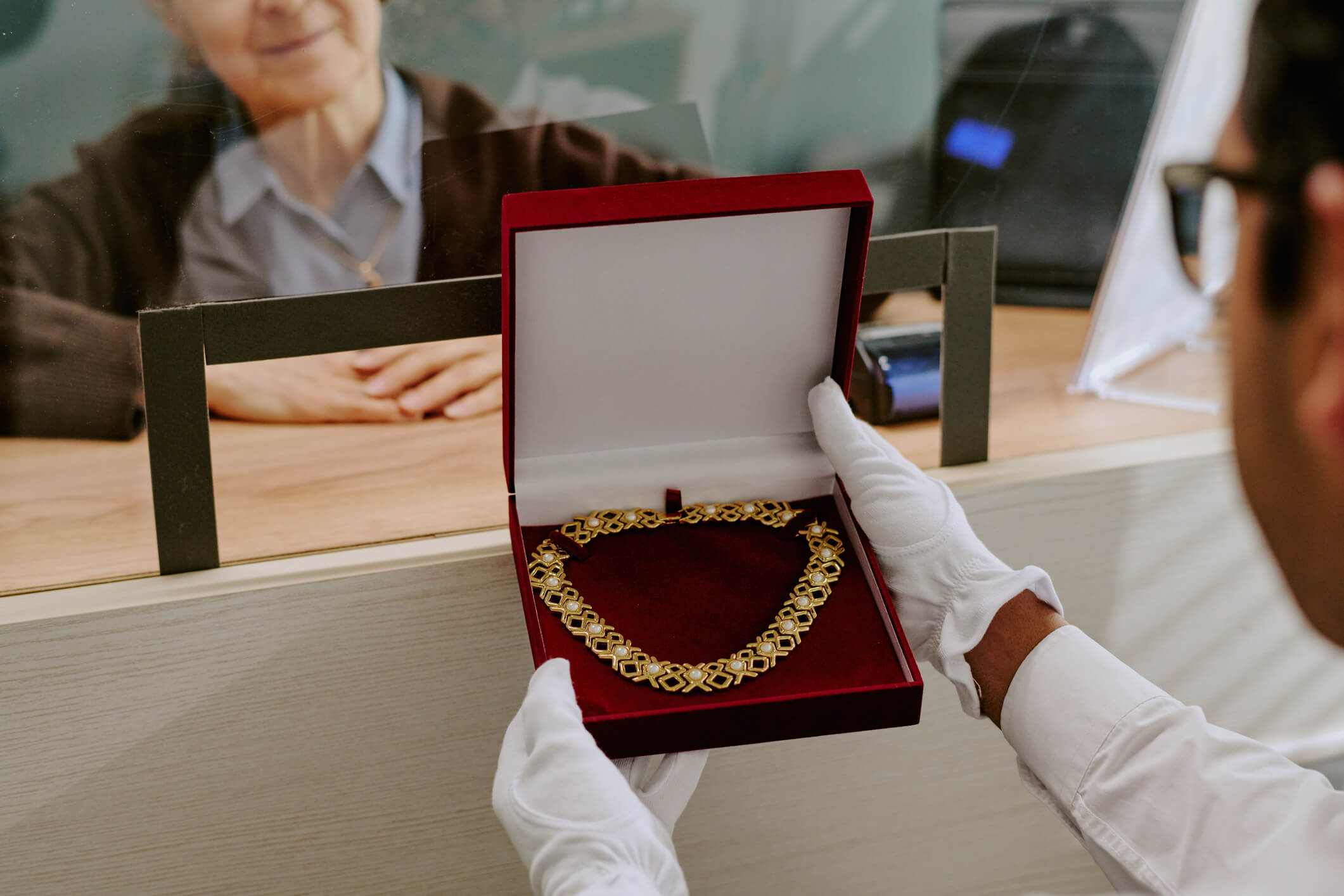
Maybe it’s a bracelet with a broken clasp you’ve been meaning to fix for two years. Maybe it’s a chain you haven’t worn since a relationship ended, or a stack of mismatched earrings and class rings sitting in a drawer. Whatever the reason, when you decide to sell gold jewelry, the offer you get can vary a lot depending on where you go and how well you understand what’s actually being valued. Jewelry isn’t priced the same way as coins or bullion, and knowing the difference before you walk in the door puts you in a much better position to get a fair deal.
What Actually Drives Your Offer
For most everyday gold jewelry, the offer a buyer makes comes down to a short list of factors: the item’s weight, its karat (how much of it is actually gold versus other alloyed metals), and the current market price of gold, commonly called the spot price. Spot price moves throughout the trading day based on global supply, demand, and financial markets, and it’s tracked continuously by exchanges and pricing services worldwide. A widely used reference point in the professional trade is the LBMA Gold Price, a benchmark set twice daily through an electronic auction administered by ICE Benchmark Administration on behalf of the London Bullion Market Association, it’s one of the standards dealers and refiners use to know where the market actually sits at a given moment.
Karat matters just as much as weight. Pure gold is 24 karat, but most jewelry is alloyed with other metals for durability, so it’s stamped at a lower karat, 18k (75% gold), 14k (about 58.3% gold), or 10k (about 41.7% gold) are the most common in American jewelry. A 14k chain and an 18k chain of the same weight are not worth the same amount, because only the actual gold content is being paid for. A reputable buyer will test the karat rather than just trust the stamp, since stamps can wear off, be inaccurate, or in rare cases be misleading. Our guide to reading karat stamps covers how to find and read them.
Melt Value vs. Craftsmanship and Brand
Here’s where jewelry differs from coins or bars: most gold jewelry is bought and sold based on its melt value, meaning the raw worth of the metal itself once weight and karat are factored against the current spot price. That’s different from how a numismatic coin is valued, where rarity, condition, and collector demand can matter far more than the metal it’s made of. A common gold coin bought from a bank might be worth close to its bullion value, while a rare date in top condition can be worth many times that, collectors and dealers researching those distinctions often lean on resources like the American Numismatic Association to understand a coin’s numismatic value beyond its metal content.
Jewelry sits in between those two worlds. Most of it is valued on melt, but there are real exceptions. Recognized designer or luxury brand pieces, think fine jewelry houses with hallmarks that hold resale demand on their own, can be worth more intact than melted down, because a buyer or reseller may pay for the design and brand recognition, not just the gold weight. If you have a piece you suspect might be a known designer name, mention it and let the buyer evaluate it both ways: as melt and as a possible resale item. It costs you nothing to ask, and it’s the only way to know which value is higher.
Gemstones are their own category entirely. Diamonds, colored stones, and pearls aren’t gold, so they don’t factor into a melt-value calculation at all. A trustworthy buyer will remove and evaluate stones separately, either offering you a price for them independently or handing them back if they’re not something the shop buys. If a buyer is quoting you one lump price for a stone-set piece without breaking out the metal and the stones separately, ask them to itemize it. You want to know what you’re being paid for the gold and what, if anything, you’re being paid for the stones.
Timing: Does When You Sell Matter?
Because spot price moves daily, the dollar amount you’re quoted today can differ from what you’d get next week, simply because the underlying market moved. That’s normal and it’s not a sign anyone is trying to shortchange you. If you’re not in a rush, it’s reasonable to keep an eye on gold prices for a week or two before selling, the same way you might watch prices before a big purchase. But don’t overthink it: for most people clearing out jewelry they no longer wear, the difference between selling on a slightly better or worse pricing day is usually small compared to the difference between getting one offer and comparing several.
How to Prep Your Jewelry Before You Sell
A little preparation helps you walk in informed, even though the buyer will do their own testing. Separate your pieces by what looks like different colors or karats rather than dumping everything into one bag, white gold, yellow gold, and rose gold are often different alloys and may be different karats. If any pieces have visible karat stamps (usually a tiny number like 14K, 18K, or 585, 750 for the European fineness marks), that gives you a rough starting point, even though the buyer will verify it. A kitchen scale won’t give you a jeweler’s-precision weight, but weighing your items beforehand, even roughly in grams, helps you have a general sense of scale before you get quotes. Give pieces a gentle clean with mild soap and water so a buyer can see the metal clearly and check for hallmarks or maker’s marks, especially if you suspect a piece might be a recognizable brand.
Comparing Offers Apples-to-Apples
The single best thing you can do to get top value is get more than one offer. When you do, make sure you’re comparing the same thing each time. Ask each buyer for the karat and weight they measured, and ask what current spot price they’re using for their calculation, gold prices can shift even within the same day, so two offers made hours apart aren’t always directly comparable unless you know what spot price each one was based on. It’s also fair to ask what percentage of melt value a buyer is offering; reputable shops are generally willing to explain their math, since buyers do need to account for refining and operating costs, which is why offers run below full spot value. A buyer who won’t explain how they arrived at a number, or who pressures you to decide on the spot, is worth being cautious about. Legitimate pricing is transparent and traceable, not a mystery number a buyer pulls out of thin air. See our guide to avoiding gold-buying scams for more red flags to watch for.
Frequently Asked Questions
Will my broken jewelry still be worth something?
Yes. A broken clasp, a bent ring, or a tangled chain doesn’t reduce its value for melt purposes, since the gold content and karat are what’s being paid for, not whether the piece still functions or looks good. Broken jewelry is actually one of the most common things people bring in to sell.
Do I need to know the exact karat before I come in?
No. It helps to have a rough idea from a stamp if you can find one, but any legitimate buyer will test the karat themselves using standard methods rather than relying on your estimate or the stamp alone.
Should I remove gemstones myself before selling?
You don’t have to. A buyer evaluating a piece for melt value can remove and assess stones during the process, and you can decide at that point whether to sell the stones too, keep them, or have the piece evaluated as a whole. Just make sure the stone value and the gold value are quoted separately so you understand what you’re being paid for each.
Is it better to sell all my jewelry at once or piece by piece?
Selling everything together is usually simpler and lets a buyer quote you a full picture at once, but there’s no requirement either way. If you have one piece you suspect might have brand or designer value beyond melt, it’s reasonable to ask that it be evaluated separately from the rest of your gold.
Whether it’s a single tangled chain or a drawer full of pieces you no longer wear, the best way to know what your gold jewelry is actually worth is to have it weighed, tested, and quoted in person. See everything we buy or find your nearest service area.
Ready to Sell? Schedule Your Evaluation
Every evaluation is honest, in-person, and based on live spot pricing, with no obligation to sell. Schedule your evaluation with New Orleans Silver and Gold today.